




- Industry: Industrial / Mechanical / Processing
- Time: 2026/11/19 - 11/21 (Thur To Sat Total 3 Days) Error Correction
- Address: Jiangsu Nanjing International Expo Center ChinaJiangsu ProvinceNanjingJianye District No. 300 Jiangdong Middle Road, Jianye District, Nanjing City, Jiangsu Province
- Sponsor:Shanghai Yewen Exhibition Service Co., Ltd
- Organizer:Shanghai Yewen Exhibition Service Co., Ltd


- Company:Shanghai Yewen Exhibition Service Co., Ltd
- Telephone:021-54388602
- Contact:Yao Hua
- Mobile:18817208969
- Address:No. 300 Jiangdong Middle Road, Jianye District, Nanjing City, Jiangsu Province

INTRODUCTION


◆Review of the Previous Session:
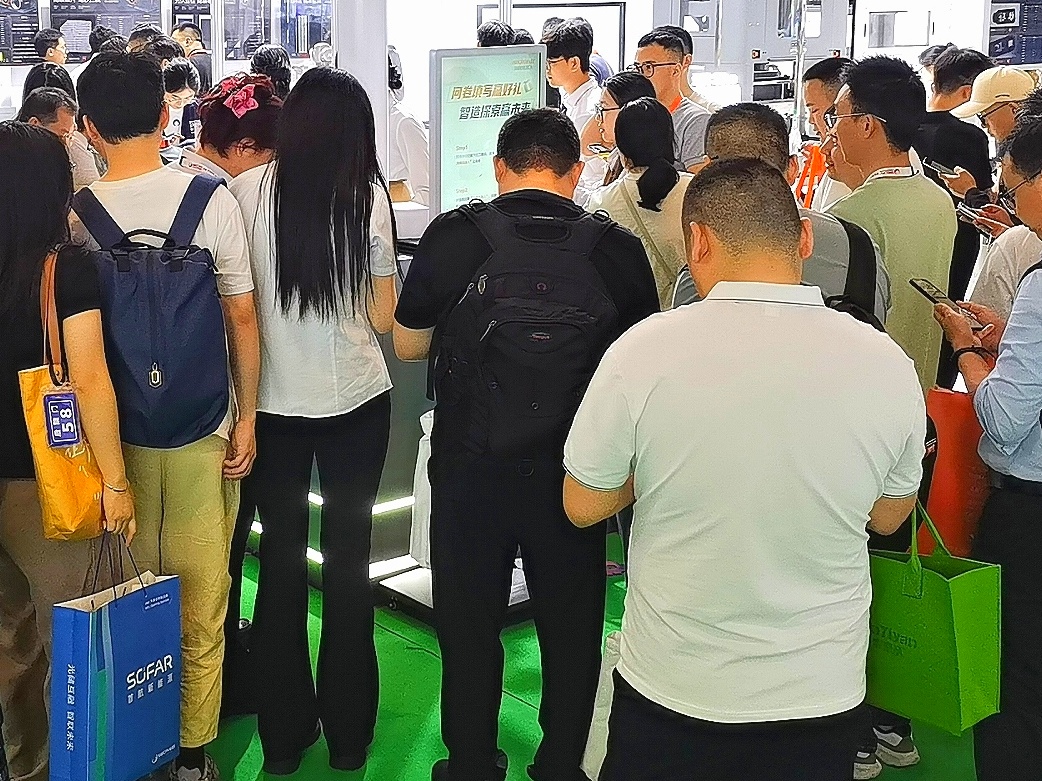
The 2026 China (Nanjing) International Machine Vision Technology and Application Exhibition has been successfully held for 8 sessions. The previous exhibition attracted nearly 500 high-quality suppliers from home and abroad to participate, including; Keyence, Cognex, Basler, SONY, Baume&Mercier, Zeiss, Hikvision Robotics, Huarui Technology, Lingyun Guang, Opt, Tianzhun Technology, Daheng Imaging, Juzi Technology, Yongxin Optics, Yutong Optics, Union Optoelectronics, Zhongrun Optics, Fuguang Co., Ltd. Well known enterprises. According to statistics, the number of visitors in the previous edition reached 54681, and it is expected that the growth rate of exhibitors and visitors at the exhibition in 2026 will be 20%.
Background of the exhibition:
Machine vision, as a key branch of artificial intelligence, has become a core supporting technology in intelligent manufacturing, autonomous driving, medical imaging, and other fields by simulating human visual systems to achieve environmental perception, object recognition, and decision support. With the breakthrough of deep learning algorithms, the improvement of hardware computing power, and the integration of multimodal perception technology, machine vision is evolving from a single function to intelligent and universal direction. International leading enterprises occupy the high-end market with their technological accumulation and ecological advantages, while Chinese manufacturers are rapidly rising through the strategy of "hardware customization+algorithm optimization". In the field of industrial cameras, domestic manufacturers have mastered the design of CMOS sensors and the development of image processing chips; At the algorithmic level, the popularity of open-source frameworks such as PyTorch and TensorFlow has lowered the threshold for innovation and spurred a large number of vertical startups. Industrial chain collaboration has become a key competitive advantage. Upstream sensor suppliers and downstream system integrators build a complete closed loop from data collection to decision implementation through data sharing and joint research and development. For example, in semiconductor testing scenarios, optical lens manufacturers collaborate with AI algorithm companies to develop customized detection models for wafer defect features, significantly improving yield rates.
In the future, machine vision will break through the limitations of a single sensory and evolve towards multimodal perception of "vision+touch+hearing". In the scene of robot grasping, after the vision system locates the target object, the force sensor can provide real-time feedback on the contact force to avoid damaging precision components; In the field of security monitoring, the combination of voiceprint recognition and behavior analysis can more accurately determine the type of abnormal events. The fusion of edge computing and machine vision will reshape the data processing paradigm. By 2026, edge devices will have the ability to perform lightweight model inference, enabling data preprocessing and preliminary decision-making locally, while only uploading critical information to the cloud. This architecture not only reduces bandwidth costs, but also meets the high real-time requirements of scenarios such as collision detection for industrial robots and emergency braking for autonomous driving. The application logic of machine vision is shifting from "replacing human labor" to "creating new value". In addition, the combination of machine vision and digital twin technology promotes bidirectional mapping between the physical world and the virtual world. In intelligent manufacturing, the visual system collects real-time production line data, drives dynamic updates of digital models, and achieves virtual debugging and optimization of the production process; In smart cities, the camera network is linked with the city simulation platform to simulate changes in traffic flow and develop diversion plans.
With the widespread application of machine vision in the public domain, the issues of data privacy and algorithm bias are becoming increasingly prominent. By 2026, the industry has established a technical framework of "data anonymization+federated learning" to achieve model training while protecting user privacy; Meanwhile, through interpretable AI technology, the logical chain of visual decision-making is revealed, avoiding discriminatory results caused by training data bias.
At the level of physical security, attack methods against visual systems (such as adversarial samples and model theft) have prompted the industry to strengthen security protection. The application of quantum encryption technology and blockchain ensures the security of data transmission and storage; Hardware level security chips prevent models from being reverse engineered or tampered with. The current field of machine vision faces issues such as inconsistent data formats and fragmented interface protocols, which hinder large-scale commercialization. Industry associations and leading enterprises are promoting the development of universal standards, covering data annotation specifications, model evaluation indicators, and system integration interfaces. For example, in the field of industrial inspection, a unified defect classification standard can promote the interconnection and interoperability of equipment from different manufacturers; In medical imaging, cross institutional data sharing protocols will accelerate algorithm iteration. Machine vision is no longer limited to a single tool attribute, but has become a bridge connecting the physical world and the digital world.
Technological development must always be centered around human well-being. The evolution direction of future machine vision should be "enhancing human capabilities" rather than "replacing human labor". For example, in assisted medical scenarios, the visual system provides decision recommendations by processing massive amounts of data, but the final diagnosis still needs to be judged by doctors based on clinical experience; In industrial production, robots undertake repetitive tasks, while humans focus on creative design and solving complex problems. The evolutionary history of machine vision is essentially a continuous breakthrough of human perception boundaries. From the initial image processing to today's multimodal intelligence, from laboratory prototypes to the widespread adoption of various industries, this technology is profoundly reshaping human production and lifestyle. Facing the future, only by adhering to both technological innovation and ethical constraints can we build an intelligent era of harmonious coexistence between machine vision and human society. As a professional exhibition in the field of machine vision directly organized by numerous domestic and foreign industry associations and regulatory authorities, with its consistent style of "clear theme, prominent characteristics, emphasis on effectiveness, and continuous innovation", its popularity and influence in the industry are increasing day by day. Industry insiders have regarded it as the best platform for "understanding industry information, grasping market trends, showcasing corporate brands, expanding trade channels, and seeking cooperation opportunities". The good results of the exhibition have won praise and favor from numerous exhibitors and visitors.
Scope
1、 Core components of machine vision
◇ Area array camera, line array camera, 3D camera, special imaging camera (infrared, high-speed, etc.)
Industrial lenses, filters, optical modules
◇ Light source, light source controller, intelligent light source module
◇ Image acquisition card, image processing card
AI algorithm platform software, image algorithm platform software
Intelligent camera, embedded vision system, code reader
2、 Machine vision components and accessories
◇ CMOS, sensors
◇ Computing platform, industrial PC
◇ Cable accessories
◇ Auxiliary products, connectors, power supplies
3、 Machine vision system solutions and integration
◇ Image processing system
◇ Machine vision integrated system
◇ Machine vision industry solutions
◇ Biometric recognition
4、 Intelligent visual equipment
◇ Visual inspection equipment
◇ Visual measurement equipment
◇ Visual automation equipment
5、 AI and Industrial Robots
◇ AI innovative products
◇ AI Innovation Solutions
Industrial robots
◇ Industrial robot solutions
6、 Industrial Metaverse
◇ Three dimensional design
◇ Virtual Reality
◇ Augmented Reality
◇ Digital twin
◇ Industrial Metaverse Solution
Costs & Precautions


Contact
- Company:Shanghai Yewen Exhibition Service Co., Ltd
- Telephone:021-54388602
- Contact:Yao Hua
- Mobile:18817208969
- Address:No. 300 Jiangdong Middle Road, Jianye District, Nanjing City, Jiangsu Province
Disclaimer
The information on this site comes from the network and related members, and the website has done its duty to review it. Due to the uncontrollability of the process of organizing the exhibition, some of the exhibition information in the station may change the subject matter, Extending or cancelling the event, please exhibitors and visitors must check with each other again before exhibiting! All the exhibitions in this site are not hosted/co-organized or organized, if there are any disputes during the exhibition, please hold the main responsibility of the exhibition organization! QQ Email: 523138820@qq.com WeChat: 523138820 Mobile: 15313206870





 浙公安网备
浙公安网备